

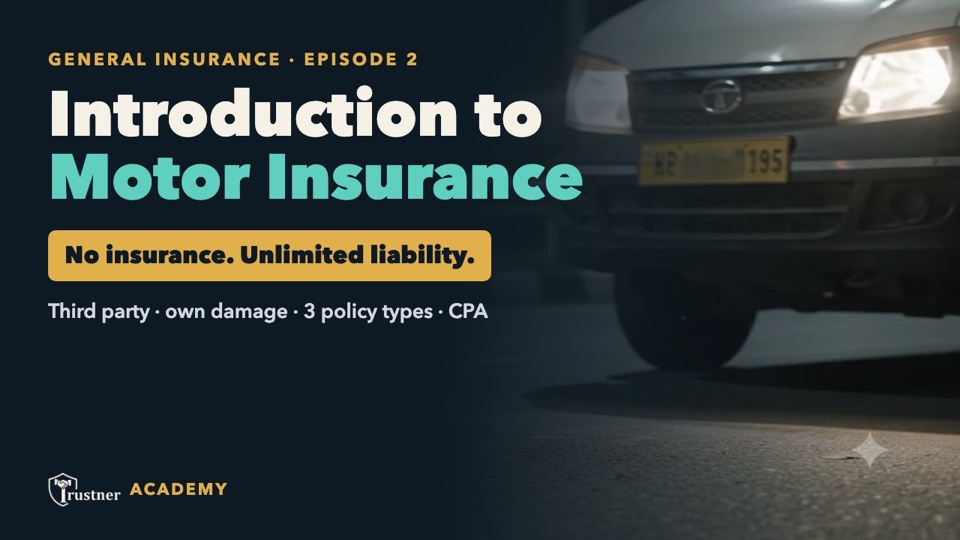
2. Introduction to Motor Insurance
8:20 · English
A delivery van, a lapsed policy and an injured rider: why third-party motor insurance is the law in India, and what every vehicle owner and POSP must know.
In this episode
- Section 146 of the Motor Vehicles Act
- Third party vs own damage
- Liability-only, comprehensive and standalone own-damage policies
- Long-term third-party cover for new vehicles
- Compulsory personal accident cover for the owner-driver
- MACT claims and hit-and-run compensation
- POSP checklist and common mistakes
Chapters
- 0:00A highway accident with no insurance
- 0:50Why motor insurance is compulsory: Section 146
- 1:09Who is the third party?
- 1:32The two parts: third party and own damage
- 2:19Who sets the premium
- 2:57Three types of motor policy
- 3:26Which policy suits whom?
- 3:48Long-term cover for new vehicles
- 4:27Compulsory PA for the owner-driver
- 5:03Documents and vehicle transfer
- 5:21Third-party claims, MACT and hit-and-run
- 6:32GST on motor premium
- 6:42POSP corner: 5 checks
- 7:06Common mistakes and recap
Quick quiz
Think of your answer first, then open it.
1. Which section of the Motor Vehicles Act makes third-party insurance compulsory?
Show answer
Section 146
2. A new private car must carry how many years of third-party cover?
Show answer
3 years
3. What is the minimum compulsory PA cover for the owner-driver?
Show answer
₹15 lakh
4. Who decides compensation in a third-party injury case?
Show answer
The Motor Accident Claims Tribunal (MACT)
5. What GST applies to motor insurance premium?
Show answer
18%
Insurance is the subject matter of solicitation. These are training and education videos by Trustner Academy. Coverage, terms, limits and exclusions differ by insurer and policy; the policy wording prevails. Figures in the videos are illustrations.
Produced with Trustner Insurance Brokers Pvt. Ltd. · IRDAI Licence No. 1067, valid up to 20 May 2028 · CIN U66220AS2024PTC025948. Visuals and voice are AI-generated; people shown are fictional.